
What Are OTT Services? How OTT Streaming Works in 2026
OTT services deliver video over the internet instead of cable. Here's how OTT works, how it differs from IPTV and CTV, and what businesses should look for.

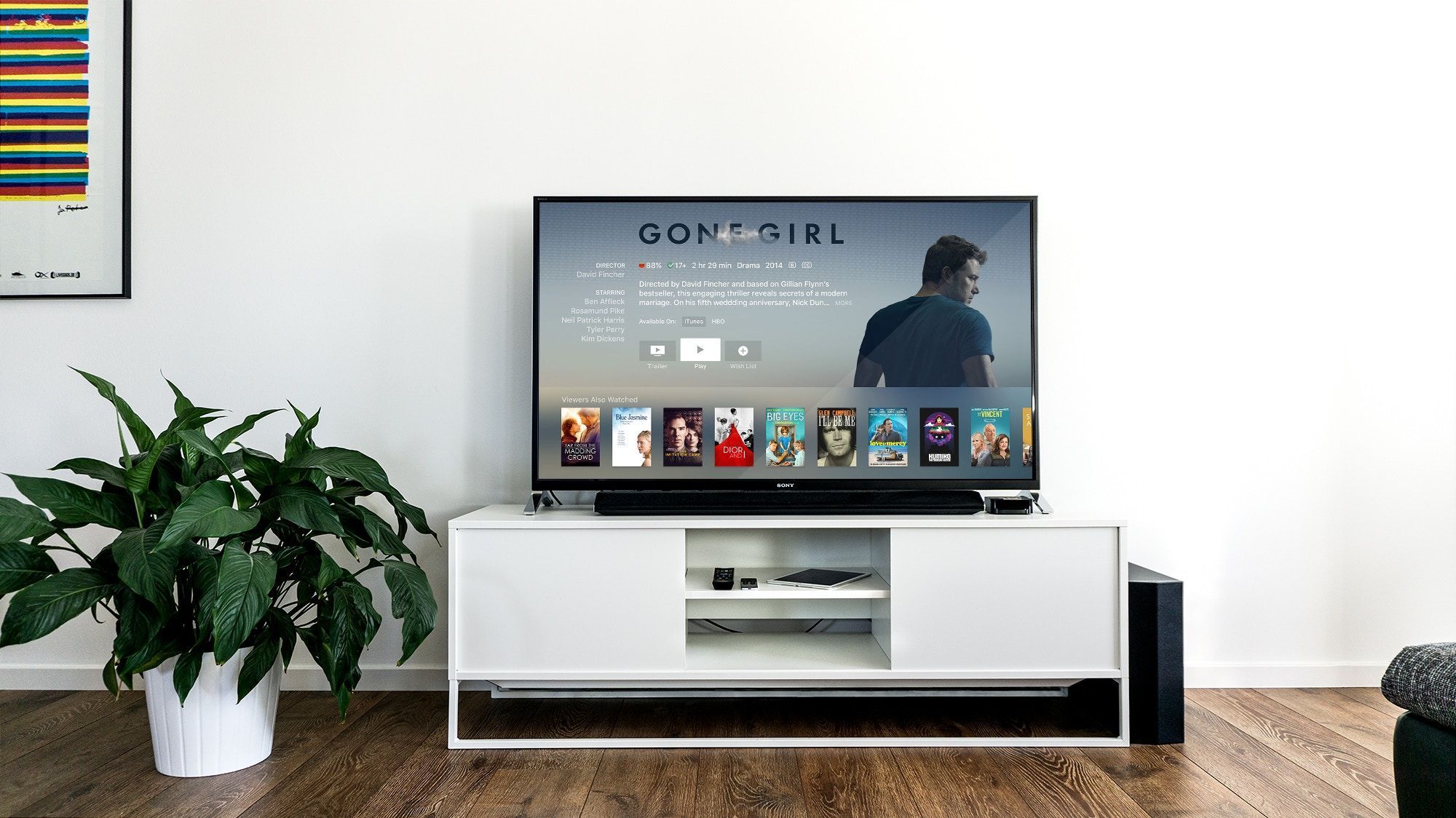
OTT services deliver video over the internet instead of through cable or satellite, and that shift is now the default viewing behavior rather than a niche alternative. In December 2025, streaming reached 47.5% of total TV viewing, the highest share Nielsen had recorded at that point (Nielsen, 2026).
• OTT means internet delivery: Netflix, Hulu, YouTube TV, and many business video platforms are OTT because they stream over standard internet connections.
• Delivery matters more than the label: CDN reach, adaptive bitrate ladders, and player behavior decide whether viewers see instant playback or buffering.
• Business models are shifting: In Q2 2025, 73.6% of total TV viewing was ad-supported, which helps explain the rise of AVOD and FAST (Nielsen, 2025).
• Website video uses the same fundamentals: If you embed product videos, training videos, or course content, OTT delivery concepts still affect startup time, quality, and conversion performance.
Most explainers stop at that definition. That is enough for a trivia answer, but it is not enough if you are trying to understand how OTT video actually gets to a screen, why some services buffer less than others, or what a business should evaluate before choosing an OTT provider.
From working with video-heavy sites, we have seen the same misconception come up over and over: people think OTT is only about entertainment apps on smart TVs. In practice, OTT is also a delivery architecture question. The same edge caching, manifest files, bitrate ladders, and player decisions that keep a movie stream stable also affect the videos on a pricing page, ecommerce product page, or online course portal.
OTT vs IPTV vs CTV vs Cable
If you are trying to compare adjacent terms, this is the shortest useful version.
| Term | How It Delivers Video | Examples | What Matters Most |
|---|---|---|---|
| OTT | Over the public internet | Netflix, Disney+, Peacock, live sports apps | CDN reach, ABR, player quality, app support |
| IPTV | Managed IP network run by the provider | Telco TV services, hotel TV systems | Quality of service on a controlled network |
| CTV | A device category, not a delivery model | Roku, Apple TV, Fire TV, smart TVs | App compatibility and viewing context |
| Cable | Traditional linear TV distribution | Cable bundles and channel packages | Channel lineup, set-top hardware, fixed schedules |
CTV is where someone watches. OTT is how the video gets delivered. That distinction matters because readers often search these terms interchangeably, but they solve different questions.
Examples of OTT Services
OTT services usually fall into a few clear buckets:
- SVOD: Subscription video on demand such as Netflix, Disney+, and Max.
- AVOD: Ad-supported on-demand streaming such as YouTube, Tubi, and free tiers on major services.
- FAST: Free ad-supported streaming TV channels such as Pluto TV, Samsung TV Plus, and The Roku Channel.
- TVOD: Rental or purchase models such as Apple TV movie rentals.
- Live OTT: Sports, events, and live channel bundles such as YouTube TV and streaming league packages.
That split matters more in 2026 than it did a few years ago. Deloitte found that surveyed subscribers paid an average of $69 per month for four paid streaming services in 2025, while 47% said they pay too much and 39% had canceled at least one paid SVOD service in the prior six months (Deloitte, 2025). We have seen the same pressure shape platform decisions on the business side too: audiences want lower-friction access, while operators want revenue models that survive churn.

How OTT Streaming Works
OTT streaming works by breaking a video into small internet-deliverable pieces, storing or caching those pieces close to viewers, and letting a player request the best version for the connection it sees in real time. That is the practical answer.
Under the hood, the workflow usually looks like this:
- The source video is encoded into multiple renditions at different bitrates and resolutions.
- The packager creates manifests for formats such as HLS or DASH.
- A CDN caches video segments near likely viewers.
- The player requests the manifest, starts with a safe bitrate, and then adjusts quality as throughput changes.
- Analytics capture startup time, buffering, errors, and quality switches so the operator can tune the workflow.
A common mistake we see is treating this as a pure hosting problem. It is really a delivery system problem. If the origin is slow, the manifest is heavy, the initial bitrate is too ambitious, or the player has to pull every segment from a distant region, viewers feel it immediately.
CDN and Edge Delivery
The CDN layer is what lets OTT scale. Instead of forcing every request back to one origin, a video CDN copies segments to edge locations close to viewers. If you want a deeper breakdown, our guide to what a video CDN does covers why this reduces startup delay and rebuffering.
We have seen teams focus on storage costs first and delivery behavior second, then wonder why performance drops outside North America. That is backwards. A cheaper storage bill does not help if the viewer hits play and waits.
HLS, DASH, and CMAF
For most OTT deployments, HLS and DASH are the core playback protocols. HLS remains the default safe choice because of Apple ecosystem support and Apple's own streaming documentation. DASH is flexible and widely used across Android, browsers, and connected devices, with the broader implementation ecosystem coordinated by DASH-IF. CMAF helps unify packaging so teams can reuse segments across HLS and DASH workflows instead of maintaining duplicate asset trees.
In our testing, protocol choices matter less than teams think for standard on-demand video and more than they think for edge cases. If you need low-latency live playback, ad insertion, DRM coverage, or broad smart TV compatibility, those details move from optional to central very quickly.
Adaptive Bitrate Streaming
Adaptive bitrate streaming is what keeps playback moving when network conditions change. Instead of sending one large file, the service offers multiple quality levels, and the player switches as needed. Our bitrate guide on video bitrate goes deeper into why ladder design matters.
One thing that surprised many teams we worked with is how often startup failures come from a ladder that looks reasonable on paper. If the lowest rung is still too large for a weak mobile connection, playback can fail before adaptation even has a chance to help.

Why OTT Delivery Matters for Business Websites Too
If you only remember one thing from this article, remember this: OTT delivery concepts do not stop at entertainment apps. They also shape the videos embedded on product pages, landing pages, private course portals, ecommerce galleries, and customer onboarding flows.
From working with business sites, we have seen the same pattern repeatedly. Teams invest heavily in video production, then lose the return because playback starts slowly, the embed drags down page performance, or the player shifts attention away from the page itself. That is why pieces like choosing a video hosting platform, video hosting for ecommerce, and video hosting for online courses matter even if you are not launching a full OTT app.
SmartVideo is built for teams that need fast starts, cleaner embeds, and less player friction on business pages. See how it fits your workflow on the pricing page.
Playback layer choices matter too. An overloaded embed can add enough script and network cost to damage the page before a visitor even presses play. Our HTML5 video player guide explains what to look for if you want more control over that layer.
OTT Business Models and Market Direction
OTT is not only a technical stack. It is also a revenue model question, and the balance keeps shifting toward mixed models. In Q2 2025, 73.6% of overall TV viewing was ad-supported (Nielsen, 2025). Deloitte also reported that 54% of SVOD subscribers said at least one paid service they used was ad-supported (Deloitte, 2025).
That is why OTT operators increasingly blend subscription, ad-supported, and transactional models instead of betting on one alone. On the business side, we have seen a similar mix: some teams want public top-of-funnel video, some need gated training libraries, and others need premium private content with tighter access control.
The broader market still supports continued investment. PwC projected the US OTT video market to grow at a 5.9% CAGR from 2024 to 2029, reaching $112.7 billion by 2029 (PwC, 2025). At the same time, Forrester reported in late 2025 that the average monthly cost of major ad-free streaming services had risen 54% since 2021 (Forrester, 2025), which helps explain why lower-cost and ad-supported options are getting more attention.

OTT Platform vs OTT Provider vs Video Hosting Platform
People often use these terms as if they mean the same thing. They do not.
| Option | Best Fit | What You Usually Get | Typical Trade-Off |
|---|---|---|---|
| Full OTT platform | Launching a subscription or channel-style service | Apps, billing, DRM, analytics, live support, multi-device reach | Higher cost and more operational complexity |
| OTT delivery provider | Teams that already have content and product layers | Encoding, packaging, CDN, player APIs, ad or DRM hooks | More integration work on your side |
| Business video hosting platform | Websites, courses, gated content, product pages | Fast embeds, privacy controls, analytics, simpler workflows | Usually less app-store distribution depth |
If you are deciding between build and buy, start with the audience experience you actually need. We have seen teams overbuy full OTT stacks when their real need was secure, fast website video with better analytics. If that is your situation, compare providers against practical criteria like startup speed, access control, embed weight, and analytics rather than only app checklists. Our guide on selecting a video platform can help structure that evaluation, and private video hosting options matter if your content is paid or gated.
Common Downsides of OTT Services
OTT has obvious advantages, but there are real trade-offs.
- Internet dependency: OTT is only as stable as the viewer's connection and the provider's delivery stack.
- Subscription fatigue: Consumers now juggle multiple services, which increases churn and price sensitivity.
- Fragmentation: Rights, device support, and app quality vary widely from one service to another.
- Operational complexity: Live delivery, DRM, and ad insertion can get technical fast.
- Performance risk on websites: Heavy embeds or poor encoding can hurt user experience and page speed.
In our experience, the strongest operators do not try to eliminate every trade-off. They choose which problems to own directly and which to offload to a provider with better infrastructure. That is usually the more practical path.

Frequently Asked Questions
What is an example of an OTT service?
Is Netflix an OTT service?
What is the difference between OTT and IPTV?
What devices can you use for OTT TV?
Is OTT TV free?
How much do OTT services cost?
What are the downsides of OTT TV?
What is an OTT streaming service?
Which OTT platform is the right fit in the USA?
Do website videos count as OTT?
Final Takeaway
OTT services are internet-delivered video services, but the useful question is not just what OTT means. The useful question is how well the delivery stack performs for the audience you are trying to reach. That is where protocol choices, CDN coverage, bitrate ladders, player behavior, and platform fit start to matter.
If your goal is cleaner, faster video delivery on business pages rather than building a full consumer streaming app, that usually points toward a simpler hosting and delivery setup. When you want to compare that path directly, review the options on the pricing page.